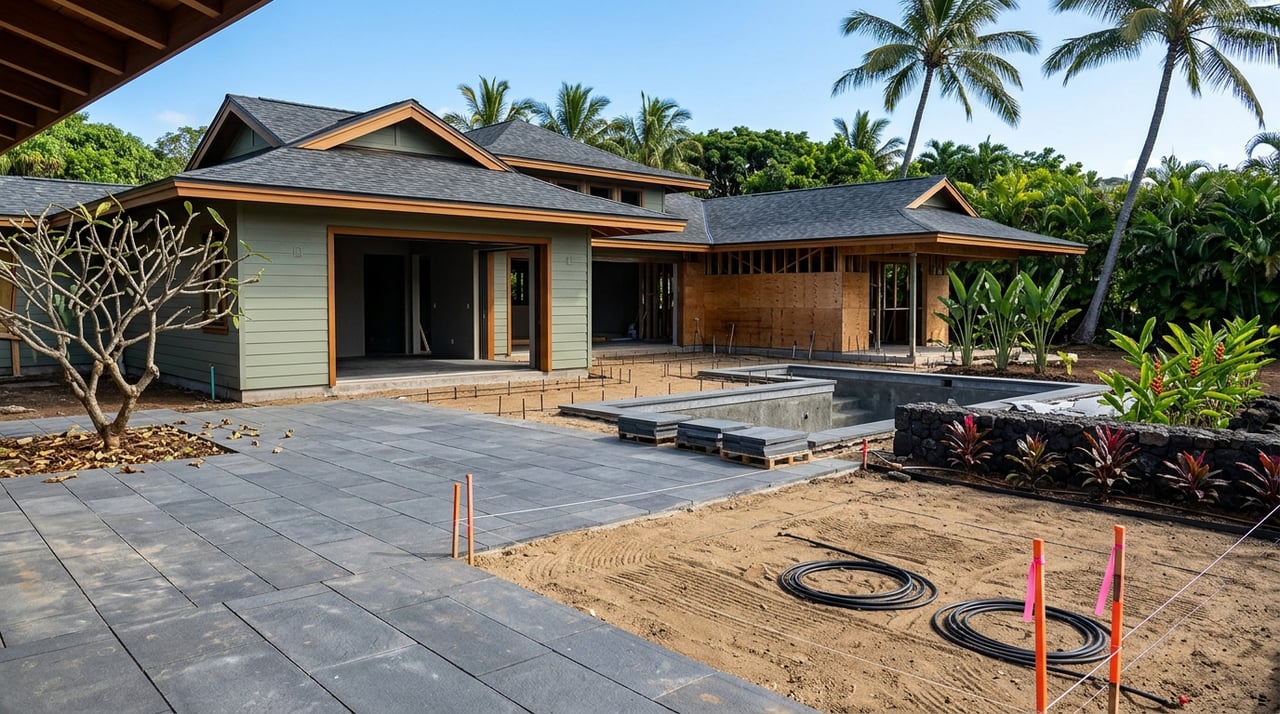
Thinking about building on raw land in Kauaʻi? The exciting part is easy to picture: your future home, your views, your layout, your lifestyle. The harder part is what happens before design ever begins, because on Kauaʻi, raw land is often a permitting and infrastructure project first. If you want to avoid expensive surprises, this guide will walk you through the key checks, approvals, and site issues that can shape what is actually possible. Let’s dive in.
Start With Feasibility First
Before you sketch floor plans or choose finishes, you need to know whether the parcel supports the home you want to build. On Kauaʻi, that starts with confirming both county zoning and the state land use district.
The County of Kauaʻi notes that its zoning maps are for general reference only, and final confirmation of official zoning boundaries must come from a licensed surveyor. The county also states that Planning Department consultation is required for permit applications, so it makes sense to begin there before investing heavily in design.
If the parcel does not already fit your intended use, the path may involve more than standard permits. In some cases, a state district-boundary amendment can become part of the process. That is one reason raw land on Kauaʻi should be evaluated carefully at the very beginning.
Check Access Early
Legal and physical access can affect both value and buildability. You should confirm how the lot is served by the road and whether a new driveway approach permit will be needed.
Kauaʻi reviews driveway approach permits separately, and access and parking are also part of building-review engineering. A parcel that looks straightforward on paper can become more complex once access requirements are reviewed.
Verify Water and Wastewater
Utilities are one of the biggest early checkpoints for raw land. Kauaʻi’s Department of Water says new development must obtain water-meter clearance before starting the building-permit process, and if no meter box is installed, the applicant first files a Water Clearance Form.
Wastewater needs the same early attention. If public sewer is available, the property must connect to it and abandon any existing individual wastewater system, according to the county’s building permit minimum requirements. If public sewer is not available, the Hawaiʻi Department of Health says the first step for an individual wastewater system is to hire a Hawaii-licensed civil engineer.
Site Conditions Shape the House
On Kauaʻi, the land itself often determines the footprint, placement, and complexity of your home. Coastal exposure, flood conditions, slope, drainage, and grading needs can all affect what you can build and where you can place it.
This is why due diligence on raw land is rarely just about lot size or views. You are also evaluating setbacks, hazards, infrastructure, and review pathways.
Coastal Lots Need Shoreline Review
For coastal parcels, a certified shoreline survey can be one of the most important documents in the process. The State of Hawaiʻi Department of Land and Natural Resources explains that the certified shoreline is the baseline used to measure setbacks and also marks the boundary between the State Conservation District and the county Special Management Area, or SMA.
Kauaʻi’s shoreline-setback application requires a survey map showing the certified shoreline, the setback, and the proposed structure or subdivision. If a variance is requested, the application also requires a site plan and a coastal-erosion analysis, and approved variances require a recorded unilateral agreement addressing erosion risk and limits on shoreline hardening.
DLNR also notes that most Hawaiʻi beaches are experiencing erosion. For buyers considering oceanfront or near-shore land, that makes coastal review more than a formality. It can directly affect the buildable area and long-term planning for the property.
Review Flood and Sea-Level-Rise Exposure
Flood screening should happen early, not after plans are complete. The official public source for flood-hazard maps is FEMA’s Flood Map Service Center, and Kauaʻi also has a county sea-level-rise constraint tool referenced by DLNR to help identify whether a structure may be affected and the potential maximum flood depth.
In practical terms, flood and sea-level-rise conditions can influence siting, elevation, engineering, and overall project cost. A lot may still be buildable, but the path can become more technical and time-consuming.
Hillside and Grading Rules Matter
Sloped or heavily graded parcels bring another layer of review. According to the county’s engineering and permit checklist, a grading permit is required for more than 100 cubic yards of excavation or fill, for cuts or fills over 5 feet, or when grading affects neighboring drainage. Grubbing over one acre can also require a permit.
The county’s hazard planning also identifies high winds, wildfire, inland flood, high surf, coastal flood and erosion, tsunami, and landslide as active concerns. On a hillside or low-lying lot, these factors can influence engineering, drainage, site design, and review timelines.
Understand the Kauaʻi Permit Sequence
One of the biggest mistakes land buyers make is assuming there is a single permit for a custom home. On Kauaʻi, the process is usually a sequence of approvals, and the order matters.
The county states that all planning applications require consultation with staff. For a typical single-family home, building permit requirements plus a zoning permit application are generally enough, and the zoning permit is usually issued administratively. More intensive projects may require Planning Commission review and a public hearing.
SMA Permits Come First
If the parcel is within the Special Management Area, the SMA permit is the first permit required before development may be authorized. The Kauaʻi Planning Commission administers these permits.
According to the state’s SMA permit guidance, a public hearing should occur within 60 calendar days after a properly filed complete application is accepted, unless waived. The Kauaʻi Planning Commission also meets on the 2nd and 4th Tuesday of each month, which is one reason project schedules can stretch.
Conservation District Review May Apply
If the parcel is in the State Conservation District, the Office of Conservation and Coastal Lands may require either site plan approval or a Conservation District Use Permit, depending on the proposed use. The state notes that some OCCL approvals can be processed in under 30 days, while Departmental and Board permits may require public hearings and additional fees.
Applications involving coastal hazards may also need shoreline certification. For some parcels, this state-level review becomes a major factor in the overall entitlement timeline.
Building Permit Requirements Are Detailed
For the building permit itself, the county requires an application, a contractor’s statement, a complete plan set, and five copies of the plans. The county also says plans generally need to be stamped by a licensed structural engineer or architect, based on its building permit minimum requirements.
The Building Division acts as the central coordination agency for comments from county, state, and federal agencies before permit approval. That coordination is helpful, but it also means your submission needs to be complete and well organized.
Common Friction Points to Expect
Even when a parcel is attractive and the vision is clear, a few issues routinely slow projects down. Knowing them early can help you make better acquisition and planning decisions.
Here are some of the most common friction points on Kauaʻi raw land:
- Water service and meter clearance
- Wastewater design and approval
- Shoreline setback and erosion exposure on coastal lots
- Flood, drainage, and elevation requirements
- Grading permits for hillside or heavily altered sites
- SMA or Conservation District review
- Separate driveway or curb-cut approvals
None of these issues automatically stop a project. They simply mean the property should be evaluated with the full approval path in mind.
Why Professional Guidance Matters
On Kauaʻi, the difference between a smooth project and a frustrating one often comes down to sequencing. Survey work, planning consultation, design, water clearance, wastewater planning, shoreline review, grading, driveway approvals, and building permit submissions all need to line up in the right order.
Based on the county and state review structure, experienced advisory support can help reduce redesigns after agency comments and keep your team coordinated. That is especially valuable for buyers considering coastal parcels, hillside lots, conservation land, or development-ready acreage where multiple agencies may be involved.
For many buyers, the goal is not just to buy land. It is to buy land that can realistically support the home and timeline they have in mind. That is where local market knowledge and technical permitting insight can make a meaningful difference.
A Smarter Way to Evaluate Raw Land
If you are considering building a custom home on Kauaʻi, it helps to think in phases. First, confirm whether the land supports your intended use. Next, identify site constraints, utility requirements, and permit triggers. Then move into design with those realities in hand.
That approach can save time, money, and disappointment. It also gives you a stronger foundation for deciding whether a parcel is truly the right fit for your goals.
If you are exploring raw land, oceanfront lots, or build-oriented properties on Kauaʻi, Malia Powers and Bruce Whale offer boutique local guidance paired with hands-on insight into land feasibility, design considerations, and permitting strategy.
FAQs
What should you check first before building on raw land in Kauaʻi?
- Start by confirming county zoning, the state land use district, access, water availability, and wastewater options before moving into design.
Does a Kauaʻi raw land parcel need water clearance before a building permit?
- Yes. Kauaʻi’s Department of Water says new development must obtain water-meter clearance before starting the building-permit process.
When does a shoreline survey matter for a custom home on Kauaʻi?
- A certified shoreline survey is especially important for coastal lots because it is used to measure setbacks and can affect buildable area and permitting.
What permits might delay a custom home project on Kauaʻi raw land?
- Common time factors include SMA permits, Conservation District review, grading permits, wastewater approvals, water clearance, and driveway approach permits.
Does every Kauaʻi custom home project need Planning Commission review?
- No. A typical single-family home may only need building-permit requirements plus a zoning permit application, while more intensive projects may require Planning Commission review and a public hearing.
Why is raw land on Kauaʻi often more complex than buying an existing home?
- Raw land usually requires early feasibility work on zoning, infrastructure, hazards, and permit sequencing before you can confirm what can actually be built.