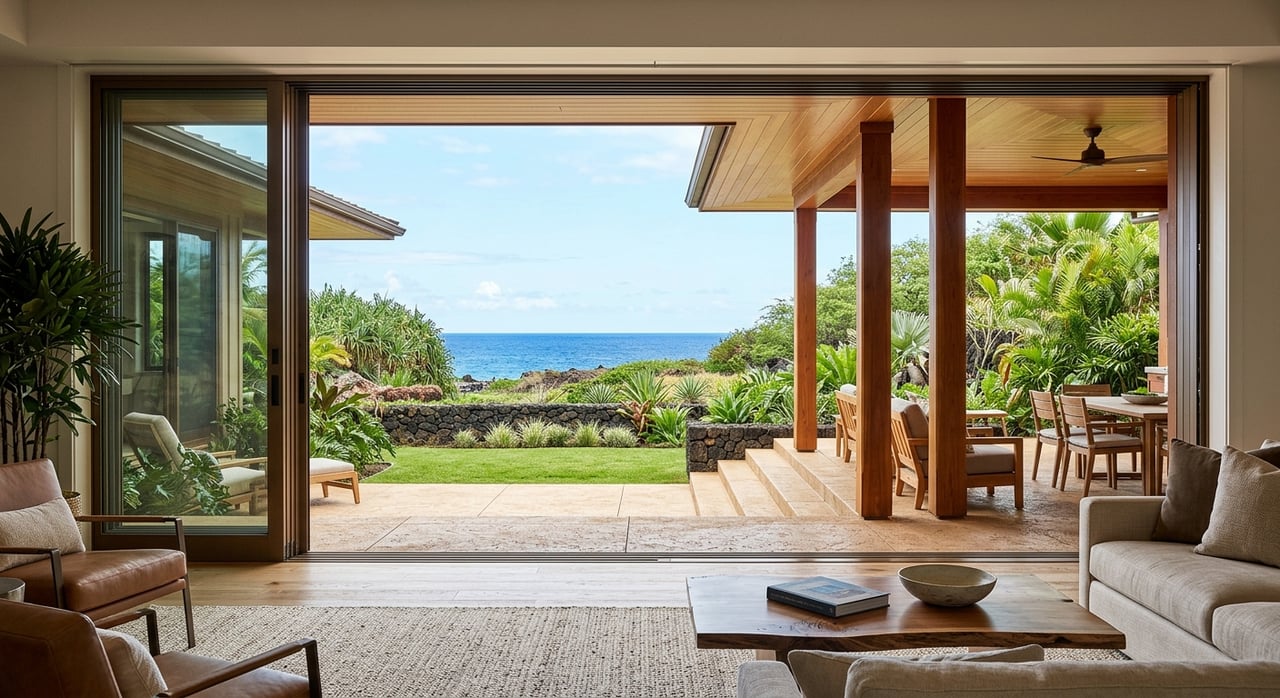
If you have ever fallen for an ocean view in Kapaʻa, you already know how quickly emotion can take over. The light, the breeze, and that stretch of blue can make a home feel like the right one before you have answered the practical questions. If you are thinking about buying an ocean-view home in Kapaʻa, it helps to look at the view through both a lifestyle lens and a due-diligence lens. Let’s dive in.
Kapaʻa Offers More Than One Home Type
Kapaʻa sits on Kauaʻi’s East Side, which the state describes as the island’s most populated district. Kapaʻa Town is known as a shopping area, and county planning materials describe it as a historic town with a walkable character and western plantation-style architecture. That setting shapes what buyers typically find when they start searching for an ocean-view property here.
In real life, an ocean-view home search in Kapaʻa usually includes several different property types. You may see older homes and cottages near the town core, condo and resort-style properties around Waipouli and Pono Kai, and more rural or upland settings in the wider Wailua Houselots, Wailua Homesteads, and Kapaʻa Homesteads area. That mix matters because the kind of view, access, and daily experience can vary quite a bit from one setting to the next.
What Really Creates an Ocean View
An ocean view is not just about how close a property is to the shoreline. In Kapaʻa, the quality of the view often comes down to line of sight, elevation, landscaping, and what sits between the home and the water. Two properties with the same listed view category can feel very different in person.
Kauaʻi County’s General Plan highlights the importance of conserving scenic qualities along major roadway corridors and promoting setbacks, landscaping, and views of scenic features in town-adjacent areas. The county also identifies the Kapaʻa Special Planning Area as an overlay intended to guide development rather than deny it. For you as a buyer, that means nearby land use and visible surroundings deserve careful review, especially if you are counting on a view to remain a major part of the property’s value and enjoyment.
Why Elevation and Screening Matter
A higher position can improve sightlines, but elevation is only one part of the story. Trees, neighboring rooflines, and future changes on nearby parcels can all affect what you actually see from inside the home, from the lanai, or from key living spaces. A listing photo rarely tells the whole story.
This is one reason an in-person or carefully guided evaluation matters so much in Kapaʻa. You want to know whether the best ocean view is from the main living area, a single bedroom, or a narrow angle off one corner of the lot. The most useful question is not just “Does it have a view?” but “How does the view live day to day?”
Treat Zoning Maps as a Starting Point
It is smart to look at county zoning maps when you are evaluating a property and nearby parcels. But Kauaʻi County is clear that digital zoning maps are for general reference only and may not fully describe all land-use restrictions on a property. The county also says final confirmation of zoning boundaries must come from a licensed surveyor.
That matters if you are trying to assess what may happen next door, behind the home, or between the property and the shoreline. Zoning can help you start asking the right questions, but it should not be the last step in your review. If the ocean view is central to your decision, confirming boundaries and understanding surrounding conditions is part of responsible due diligence.
Daily Convenience Is Part of the Value
A beautiful view can draw you in, but daily convenience often determines how a home feels over time. Kapaʻa works well for many buyers because it functions as one of the island’s main convenience hubs. State information describes Kapaʻa Town as a shopping area on the East Side, and the Kapaʻa Public Library says it serves Kauaʻi’s largest population center.
The county also operates a Kapaʻa Satellite DMV with appointment-only services for motor vehicle transactions, utility payments, bus passes, and tipping coupons. If you are relocating full time or splitting time between islands, those practical services can make everyday life easier. The appeal of Kapaʻa is often the combination of scenery and convenience, not just one or the other.
Kapaʻa Schools and Family Logistics
If school access is part of your home search, Kapaʻa has a full public school progression in town. Kapaʻa Elementary serves grades K through 5 at 4886 Kawaihau Road, Kapaʻa Middle serves grades 6 through 8 at 4867 Olohena Road, and Kapaʻa High serves grades 9 through 12 at 4695 Mailihuna Road. All are in the Kapaʻa-Kauaʻi-Waimea complex area.
Even if your household does not need schools, these locations can still shape traffic patterns and your daily route planning. A home that looks perfectly placed on a map can feel different during morning drop-off or afternoon pickup times. It is worth testing the route at the times you expect to use it most.
Traffic and Airport Access Deserve a Real Test
On Kauaʻi’s East Side, movement up and down the corridor affects your day more than many buyers expect. County bus schedules list Route 70 Līhuʻe, Route 500 Līhuʻe-Hanalei, and Route 800-850 Wailua/Līhuʻe, and the printed schedules note there is no bus service on Sunday. Route 500 includes stops at Waipouli Beach Resort, Pono Kai, Kapaʻa Library, and Kapaʻa Neighborhood Center, with the county noting that arrivals can be affected by traffic and route deviations.
Līhuʻe Airport is the island’s primary airport, and county bus information says buses serve the airport daily. That is useful for understanding regional access, but if you drive regularly, road conditions and timing still matter. Kauaʻi’s General Plan notes that highway widening through Kapaʻa Town has been controversial because of impacts on commercial property, parking, pedestrian character, and business viability.
For that reason, one of the smartest steps you can take is to test-drive the route from the property during peak times. Try the drive during school drop-off and during heavier visitor traffic hours. A home’s location should work not only on a sunny showing day, but also on a normal Tuesday.
Coastal Risk Should Be Part of the First Conversation
When you buy near the coast, you are not just buying a view. You are also buying into a set of rules, site conditions, and risk factors that deserve close attention early in the process. In Kapaʻa, that starts with shoreline and coastal review.
Kauaʻi County administers Special Management Area requirements and shoreline setback rules. The county also provides a Sea Level Rise Constraint District viewer and reporting tool that can show whether a proposed structure is inside the district and the maximum flood depth exposure. These are not details to save for the final week before closing.
The Permit Questions to Ask Early
If you are considering renovations, additions, or future improvements, coastal rules can directly affect what may be possible. That is especially important for buyers looking at near-shore homes with older improvements or buyers who want to personalize a property after purchase. What seems simple from a design standpoint may require much more review from a land-use standpoint.
This is where a careful, local, property-specific review becomes valuable. You want to understand whether the existing home sits in an area affected by SMA rules, shoreline setback issues, or sea level rise constraints. If your plans include changing the structure, adding outdoor features, or improving the site, these questions should shape your decision before you get attached to a renovation vision.
Flood and Tsunami Context Matter Too
Flood screening is another must-check item for an ocean-view purchase in Kapaʻa. FEMA identifies the Flood Map Service Center as the official online source for flood-hazard mapping products, and coastal flood insurance rate maps identify special flood hazard areas. Knowing the flood-zone context of a property can affect both planning and ownership costs.
Tsunami readiness also matters in coastal areas. Kauaʻi County advises residents to heed warnings, evacuate immediately when told, stay away from the shoreline, and wait for the official all-clear before returning. Even if a home feels elevated or set back, it is still important to understand the local evacuation context and emergency planning before you close.
A Smart Kapaʻa Buyer Checklist
When you are evaluating an ocean-view home in Kapaʻa, keep your review focused on both enjoyment and feasibility. A practical checklist includes:
- Confirm zoning boundaries with a licensed surveyor
- Check Special Management Area and shoreline setback status
- Review the Sea Level Rise Constraint District report
- Verify the FEMA flood-zone context
- Understand tsunami evacuation considerations
- Test-drive daily routes during peak traffic times
- Evaluate where the ocean view is actually experienced from the home
This kind of process helps you move past the romance of the listing and into the reality of ownership. That does not take away the magic of the property. It helps protect it.
Why Local Guidance Matters in Kapaʻa
Kapaʻa can be a rewarding place to buy because it offers a mix of coastal scenery, town convenience, and varied property types. But that same variety means two homes with similar price points or similar marketing language may come with very different day-to-day experiences and very different permitting or site questions. The details matter here.
If you are buying an ocean-view property, it helps to work with advisors who can look beyond the photo set and ask how the property functions, what constraints may apply, and how the home fits your goals. Whether you want a full-time residence, a second home, or a property with future improvement potential, clear local insight can save you time and help you make a more confident decision.
If you are considering an ocean-view home in Kapaʻa and want a thoughtful, high-touch perspective on view value, location, and property constraints, connect with Malia Powers and Bruce Whale for a Kauai Concierge Consultation.
FAQs
What types of ocean-view homes can you find in Kapaʻa?
- In Kapaʻa, ocean-view options may include older homes and cottages near town, condo or resort-style properties around Waipouli and Pono Kai, and more rural or upland properties in the broader homestead areas.
What affects an ocean view at a Kapaʻa property?
- In Kapaʻa, an ocean view is often shaped by line of sight, elevation, landscaping, nearby structures, and the possibility of future changes on surrounding parcels.
Should you rely on Kauaʻi County zoning maps when buying in Kapaʻa?
- Kauaʻi County says digital zoning maps are for general reference only, so buyers should use them as a starting point and confirm zoning boundaries with a licensed surveyor.
What coastal risk checks matter for a Kapaʻa ocean-view home?
- Important checks for a Kapaʻa coastal purchase include Special Management Area status, shoreline setback review, the Sea Level Rise Constraint District report, flood-zone context, and tsunami evacuation considerations.
How do you evaluate daily convenience for a home in Kapaʻa?
- In Kapaʻa, it helps to look at access to shopping and services, school-route logistics if relevant, bus routes, airport access, and traffic patterns during the times you will actually travel most often.