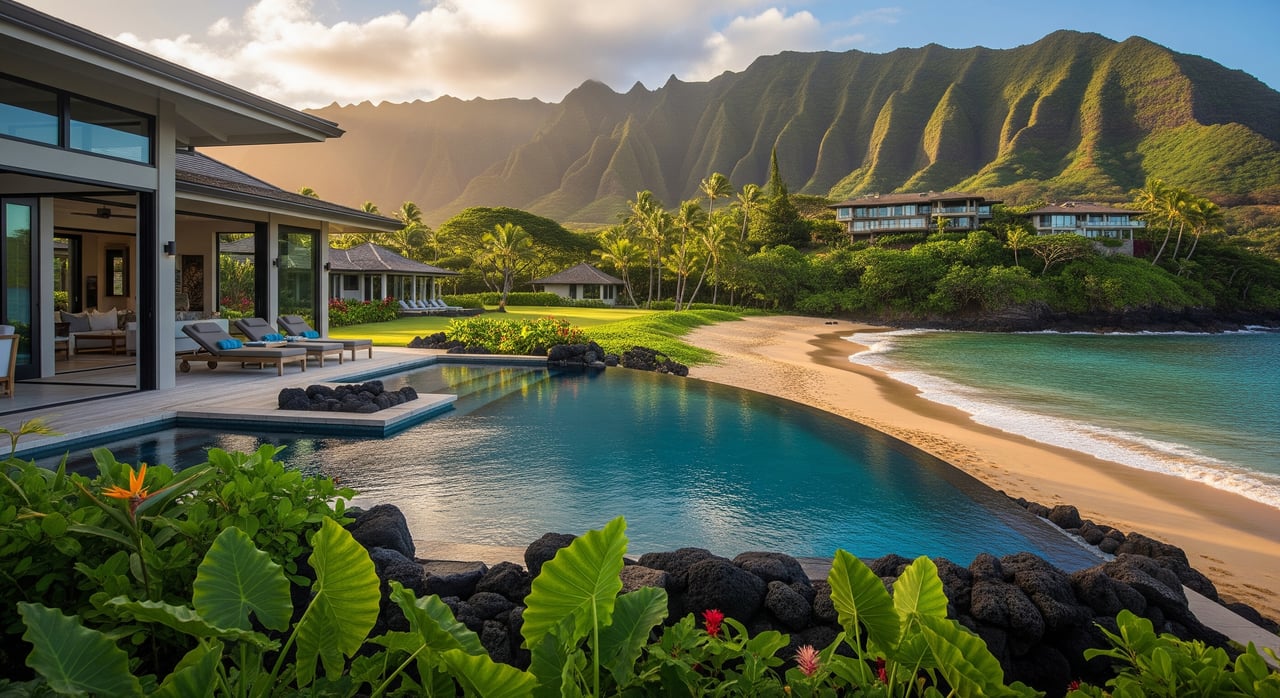
Are you picturing mornings on Hanalei Bay, coffee in hand, with the ocean right outside your door or just beyond the treetops? Deciding between oceanfront and ocean-view in Hanalei is thrilling, but it is also nuanced. The right choice balances lifestyle, privacy, risk, and long-term value. In this guide, you will learn what buyers actually pay for, the tradeoffs that matter in Hanalei, and the due diligence that protects your investment. Let’s dive in.
Oceanfront vs ocean-view in Hanalei
If you love daily beach time and the idea of stepping directly onto the sand, oceanfront can feel unmatched. If you value privacy, broad panoramic vistas, and lower exposure to coastal hazards, an elevated ocean-view home can be the smarter buy.
- Oceanfront: direct beach access, immediate views, stronger daily-use benefits, and higher exposure to coastal risks and regulation.
- Ocean-view: elevation, often wider panoramas and privacy, usually lower hazard exposure, and a broader potential buyer pool at resale.
Both options are limited in Hanalei, which keeps demand strong among second-home and lifestyle buyers. Your priorities and risk tolerance drive the premium you will pay.
Value drivers that set prices
Direct beach access and legal rights
You pay a premium for convenient, private access from your home to the beach. In Hawaii, shoreline and public access rules are significant, so you should confirm recorded easements, any public access across the parcel, and shoreline certification records with the State and County. True daily-use convenience is valuable, but clarity on what is private versus public is essential.
View quality and orientation
Not all views are equal. Oceanfront usually offers immediate, face-on views, while ocean-view ranges from partial glimpses to sweeping panoramas from higher ground. Angle to the bay, distance to the shoreline, elevation, and the risk of future obstructions all affect value. Unobstructed, panoramic views command a premium over partial or filtered outlooks.
Privacy, noise, and setting
Micro-location matters. Oceanfront near popular access points or landmarks like the Hanalei Pier can experience more foot traffic and noise, which can diminish exclusivity. Elevated ocean-view homes often have fewer passersby and more controlled access. If privacy is a top priority, an upland site can outperform oceanfront in perceived value.
Day-to-day lifestyle and usability
Oceanfront simplifies daily life on the water. Early surf, sunset strolls, and beach gatherings become effortless. Ocean-view homes may add a quick walk or drive to the sand, but well-designed terraces and indoor-outdoor living areas can deliver a similar lifestyle with fewer coastal tradeoffs.
Sun, wind, and outdoor living
Orientation affects how you live outside. Hanalei’s north shore microclimate brings regular trade winds and frequent rainfall, which shape maintenance and outdoor use. Some buyers prefer breezier settings, while others seek sheltered spaces with afternoon sun. Your comfort with wind and sun exposure will guide which locations feel best.
Cost and risk factors that change the math
Coastal hazards and long-term resilience
Oceanfront parcels face higher exposure to erosion, sea-level rise, storm surge, and tsunami risk. Flood zones such as VE or AE on FEMA Flood Insurance Rate Maps can affect design and construction. State and federal tools, including NOAA’s scenario maps and Hawaii emergency and tsunami resources, help you understand potential inundation. Elevated ocean-view sites typically carry lower long-term physical risk.
Insurance and financing realities
Flood and wind or hurricane insurance can be materially more expensive and harder to source for low-lying shoreline parcels. Some carriers limit coverage near the water, and private policies may be needed. Lenders consider collateral risk, so underwriting can be tighter for high-hazard zones. These factors affect both your holding costs and future buyer demand.
Regulation and permitting on the coast
Shoreline setbacks, Special Management Area requirements on Kauai, and limits on new shoreline hardening can constrain what you build or renovate on the water. Coastal permitting generally takes longer and involves more agencies, which can add uncertainty and cost. If you plan to rent, Kauai’s rules for short-term rentals apply by zoning and permit history, so you should confirm what is allowed before you buy.
Maintenance and operating costs
Salt air accelerates corrosion and wear on metals, HVAC, windows, and exterior finishes. Roofs, decking, and exterior wood often need more frequent replacement. Landscaping, termite control, and moisture management add ongoing costs. Utility configurations also vary in the Hanalei area, and private septic systems come with maintenance and replacement considerations.
Resale dynamics and buyer pool
Oceanfront attracts a narrower, often wealthier buyer base with strong lifestyle motivations. That pool can shrink in a downturn, especially for parcels with high hazard exposure. Elevated ocean-view homes tend to appeal to a wider audience that values privacy, views, and lower risk, which can help liquidity at resale.
Decision framework to choose the right fit
Use this quick framework to align your choice with your goals:
- Frequency of use: Will you be here weekly, seasonally, or occasionally? Daily users often favor direct access.
- Privacy vs access: Is a quieter hilltop retreat more valuable than instant sand underfoot?
- Hazard tolerance: Are you comfortable with coastal risk, insurance costs, and permitting limits on shoreline protection?
- Lifestyle preferences: Do you prioritize surf access, sunset exposure, and space for outdoor dining or guest gatherings?
- Exit strategy: Would you prefer a broader buyer pool at resale or a rarer oceanfront niche with higher upside and higher risk?
Due diligence checklist for Hanalei buyers
Protect your investment by verifying the details that affect both joy of use and long-term value:
- Title report and recorded easements, including any public shoreline access across the parcel.
- State shoreline certification and historical shoreline surveys on file.
- FEMA Flood Insurance Rate Map designations and local tsunami or coastal hazard maps.
- Sea-level rise and inundation scenario maps from federal or state tools for the parcel.
- County planning, zoning, and Special Management Area history, including prior permits or violations.
- Insurance quotes for flood and wind or hurricane from multiple carriers, including any exclusions.
- Structural and geotechnical inspections focused on foundation and scour or erosion risk.
- Utility status and capacity, including sewer vs septic, water source, and septic system condition.
- Short-term rental status and any required registrations if income potential matters.
- Historical aerials or photos that show shoreline change and seasonal beach width.
Compare apples to apples with the right metrics
When you evaluate two properties, use objective benchmarks:
- Distance to the certified shoreline and elevation above mean sea level.
- FEMA base flood elevation compared to finished floor elevations.
- Lot size and shoreline frontage width for oceanfront.
- Building setbacks from the certified shoreline.
- Orientation to the bay, primary view corridors, and obstruction risk.
- Verified recent comparable sales for oceanfront and for ocean-view in Hanalei via MLS and County records.
A simple example: an oceanfront cottage with VE flood zoning, short setbacks, and high public foot traffic can price similarly to an elevated ocean-view home with expansive sightlines, lower hazard exposure, and better privacy. Your preference for direct access versus privacy will tip the scale.
When ocean-view beats oceanfront
- You want wide, panoramic views with fewer passersby below your lanai.
- You prefer a home that is easier to insure and finance with fewer coastal permitting constraints.
- You value lower maintenance, greater resilience, and a broader resale audience.
When oceanfront is worth the premium
- You plan to use the beach daily for surf, swimming, and gatherings.
- You want an iconic Hanalei experience with immediate water connection.
- You accept higher insurance, maintenance, and regulatory complexity in exchange for lifestyle benefits.
Work with advisors who know the shoreline
Hanalei’s coastline and regulations are unique, and the details matter. You deserve a team that pairs neighborhood knowledge with technical clarity on design, permitting, and resilience. Our boutique practice combines hands-on advisory with premium marketing so you can buy with confidence and enjoy the lifestyle you came for.
Ready to explore oceanfront and ocean-view options in Hanalei? Connect with Malia Powers and Bruce Whale for a Kauai Concierge Consultation and a tailored plan for your goals.
FAQs
What is the biggest price driver between oceanfront and ocean-view in Hanalei?
- Direct beach access and the quality of the view drive pricing, with privacy, hazard exposure, and regulation also playing major roles.
How do coastal hazards affect Hanalei oceanfront value?
- Erosion, sea-level rise, storm surge, and tsunami risk can impact long-term usability, insurance costs, and future permitting for improvements.
What due diligence should I do before buying oceanfront in Hanalei?
- Verify shoreline certification, easements, flood and hazard maps, insurance availability, SMA history, structural and geotechnical findings, and utility status.
Are short-term rentals allowed for Hanalei homes?
- Kauai County regulates short-term rentals by zoning and permit history, so you should confirm current rules and property status with local records.
Why might an elevated ocean-view home resell more easily?
- Ocean-view often appeals to a wider buyer pool seeking panoramic views, privacy, and lower risk, which can help market liquidity in different cycles.
Does proximity to Hanalei Pier or public access affect value?
- Yes. Higher foot and vehicle traffic can reduce privacy at some oceanfront locations, which influences pricing compared to quieter micro-locations.