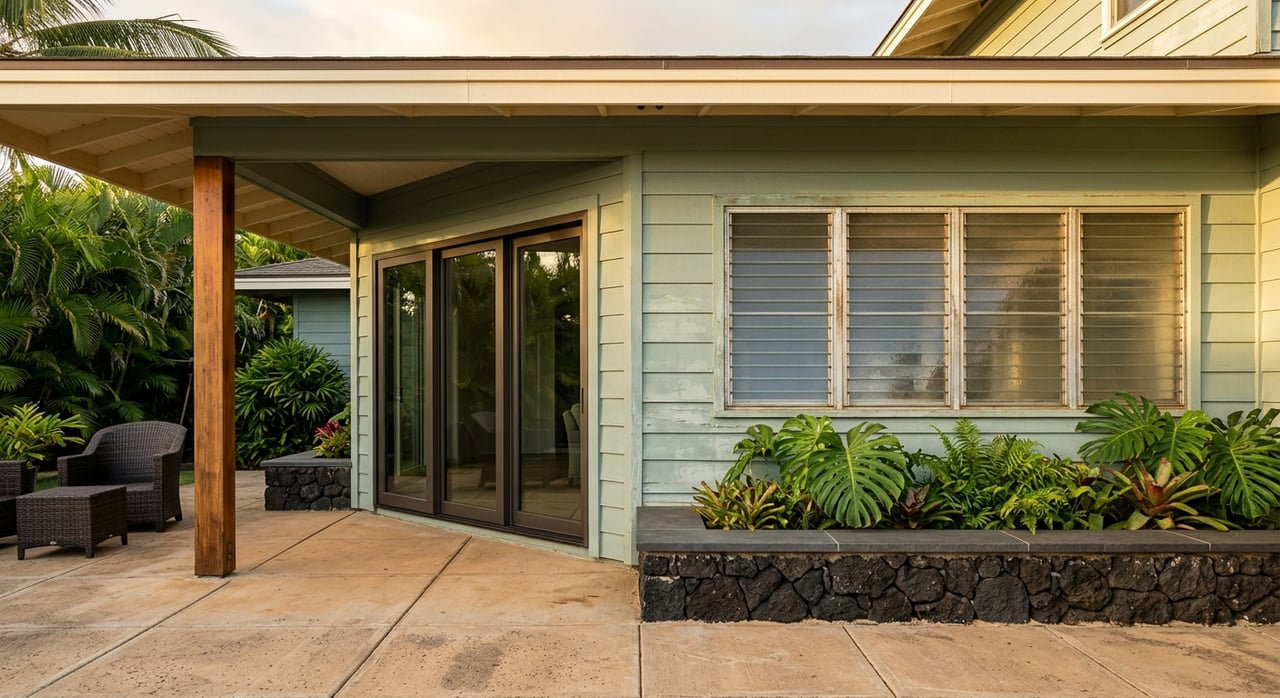
Thinking about remodeling a home on Kauai? The opportunity can be exciting, but the island’s permit path, coastal conditions, and site constraints can shape your budget and timeline faster than finishes or floor plans. If you are buying, selling, or planning improvements in Kauai County, understanding the basics early can help you avoid costly surprises and move forward with more confidence. Let’s dive in.
Start With Remodel Feasibility
Before you focus on design ideas, ask a simpler question: is this a practical remodel candidate under current county rules? Kauai’s building code was repealed and replaced by Ordinance 1163 on October 10, 2024, and it applies broadly to construction, alteration, enlargement, replacement, repair, and demolition.
That means many value-add remodels are regulated unless they clearly fall into an exemption. Cosmetic finish work like painting, floor covering, cabinets, countertops, and similar finish items is exempt. Like-for-like repairs may also be exempt when they use similar materials, do not affect electrical or mechanical systems, and stay under $20,000 in valuation over any 12-month period.
For many buyers, that creates a useful first filter. If your scope stays close to finish work or straightforward repairs, the path is usually cleaner. If your plan expands into structural changes, utility changes, or site work, the review process may become much more involved.
Green Flags for a Kauai Remodel
Some properties are simply easier to improve than others. A stronger remodel candidate often has a limited scope, existing utility service, and no obvious site-related constraints.
Look for these green flags:
- Interior finish updates only
- Simple maintenance or exempt work
- Existing utilities and legal access already in place
- No shoreline, flood, or sea-level-rise overlay concerns
- No sign of major unpermitted additions
Red Flags to Catch Early
On Kauai, the real issue is often not whether a home can be improved, but what the improvement triggers. County and state review can expand quickly when a project touches coastal, flood, grading, access, or utility issues.
Watch for these red flags:
- Shoreline setback issues
- Special Management Area review
- Flood hazard areas or floodway conditions
- Large grading or drainage changes
- Driveway or access changes
- Water or sewer capacity questions
- Prior undocumented alterations
Know Kauai’s Design Priorities
A remodel on Kauai is not just about style. It also needs to respond to wind, moisture, salt air, and hazard exposure in a way that makes sense for the location.
The current county code adopts the 2018 International Building Code and 2018 International Residential Code, along with Hawaii-specific appendices for hurricane sheltering, wind design, and indigenous Hawaiian architecture. For homeowners, that makes early attention to wind resistance, roof detailing, and opening protection especially important.
Coastal Materials Matter
If a home is near the ocean, material choices carry real long-term consequences. Salt spray can accelerate corrosion, especially around exposed metal fasteners and connectors.
That is why corrosion-resistant or stainless materials deserve early consideration for near-ocean remodels. A finish or hardware choice that looks fine on paper may perform very differently in a coastal setting.
Flood Conditions Can Change the Design
Flood exposure is one of the biggest variables in a Kauai remodel. County building guidance notes that projects in flood-fringe areas may require lowest floors to be elevated to or above base flood elevation, along with elevation certification. Non-residential buildings may require floodproofing.
If a property is in a floodway, the review can become more technical. A civil engineer’s flood study and a no-rise certification may be required. In coastal high-hazard areas, elevated framing requirements can also come into play.
Shoreline and Sea-Level Constraints
Ocean-view and oceanfront properties often come with another layer of review. Kauai’s Sea Level Rise Constraint District resources help identify whether a parcel lies within the district and the maximum flood depth tied to that location.
Projects near the shoreline may also require a certified shoreline survey before anything else moves forward. If a variance is needed, the package can become much more detailed, including site plans, contour data, coastal erosion analysis, and recorded indemnity language.
Understand the Permit Path
On Kauai, the permit process works best when you assume that accuracy at the start saves time later. County guidance shows that the typical starting package includes a building permit application, checklist, contractor’s statement, and related zoning application, with ePlan available for electronic submittal.
The Planning Department states that all applications require consultation with Planning staff. In some cases, forms beyond what is posted online may also be required. That is one reason early local guidance can be so valuable.
Typical First Steps
For a standard residential remodel, the process often begins with:
- Confirming the correct TMK
- Consulting with Planning staff
- Preparing the required checklist
- Completing the contractor’s statement
- Filing the zoning permit application
- Submitting plans and permit materials through the county process
The building official checks permit applications and plans, and other county departments may review them for compliance. This is where project scope really matters.
Administrative Review vs. Hearing Process
Some single-family residential projects may receive zoning permits administratively. That is usually the more straightforward path.
However, more intense construction or use changes may require a Planning Commission public hearing. Since the Planning Commission meets on the second and fourth Tuesday of each month, hearing-based approvals naturally tend to move more slowly than administrative approvals.
Coastal Projects Often Add Steps
If the home is near shore, the order of review can become layered. Within the Special Management Area, an SMA permit is the first permit required for development.
In practical terms, a near-shore remodel may need an SMA assessment, a shoreline setback determination, and then building and zoning review. That sequence can have a major effect on timing, feasibility, and carrying costs.
Site Work and Utilities Can Trigger More Review
A remodel is not always just a building issue. Changes to grading, drainage, driveway approaches, floodplain conditions, or utility service can involve additional county divisions.
Engineering handles flood plain matters, grading, stockpiling, driveway approaches, and road permits. Grading permits can be triggered by more than one acre of work, more than 100 cubic yards of excavation or fill, cuts or fills over 5 feet, or drainage impacts.
The Department of Water may also need to be contacted first for water clearance. The county publishes different residential flowcharts depending on whether the project adds dwellings or kitchens, does not add them, or makes no water improvements.
Protect Your Timeline and Budget
One of the easiest mistakes in a Kauai remodel is underestimating process risk. Even when the work itself seems manageable, timing can expand if the application is incomplete, the scope changes, or the property falls into a hazard or shoreline review category.
The county code includes a few timeline rules worth keeping in mind. Plan-review fees are 15% of the building fee and are non-refundable. Applications with paid plan-review fees expire if no permit is issued within 365 days.
Permits also expire if work does not begin within 180 days or if work is suspended for 180 days. One 180-day extension may be granted.
Starting work without a required permit can get expensive. The code authorizes a special investigation and an added fee equal to the permit fee, with a minimum combined amount of $200.
When to Bring in Local Experts
On Kauai, the best time to build your team is usually before closing if the project goes beyond cosmetic work. That is especially true for shoreline-adjacent homes, floodway sites, grading-heavy lots, or properties with unclear improvement history.
Depending on the site, you may need a surveyor for a certified shoreline survey, a civil engineer for flood or grading work, and an architect, designer, or contractor who can prepare plans that meet county requirements. These are not luxury extras when the property enters shoreline, floodway, or grading territory.
There is also a practical records issue to keep in mind. Residential building plans and building, electrical, and plumbing permit applications are retained for seven years, so older improvements may require seller documentation or local file searches.
What This Means for Buyers and Sellers
If you are buying with remodeling in mind, a strong candidate is usually one where the planned improvements stay within exempt finish work or a relatively straightforward administrative permit path. That does not guarantee a simple process, but it can reduce uncertainty.
If you are selling a property with improvement potential, clear documentation and realistic framing matter. Buyers often want to know whether a home is suited for cosmetic upgrades, more substantial permitted work, or a complex coastal review path.
For both sides, the goal is the same: understand the property before assumptions turn into expenses. On Kauai, local knowledge and technical clarity can make a meaningful difference.
If you are evaluating a remodel opportunity, preparing a property for market, or sorting through permit and design questions, Malia Powers and Bruce Whale offer the kind of local, hands-on guidance that can help you move forward with confidence.
FAQs
What remodeling work is often exempt in Kauai County?
- Cosmetic finish work such as painting, floor covering, cabinets, countertops, and similar finish items is generally exempt, and some like-for-like repairs may also be exempt if they use similar materials, do not affect electrical or mechanical systems, and stay under $20,000 in valuation over a 12-month period.
What permit steps usually come first for a Kauai home remodel?
- A typical starting package includes a building permit application, checklist, contractor’s statement, and zoning permit application, and the Planning Department says all applications require consultation with Planning staff.
What makes a Kauai remodel more complicated near the coast?
- Near-shore projects may involve shoreline setback review, Special Management Area review, sea-level-rise constraints, flood requirements, or certified shoreline survey work before standard building and zoning review can move ahead.
When does grading work trigger more review in Kauai County?
- County guidance says grading permits can be triggered by more than one acre of work, more than 100 cubic yards of excavation or fill, cuts or fills over 5 feet, or drainage impacts.
Why should Kauai buyers review prior permits before remodeling?
- Older improvements may not be easy to verify, and residential building plans plus building, electrical, and plumbing permit applications are retained for seven years, so seller records or local file searches may be important when evaluating past work.